Express progression of cultural competence learning as it applies to clinical nursing practice
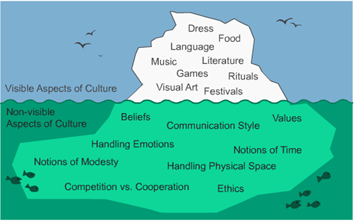
Srivastava (2007), explains cultural competences as the ability of health care provider to interact with patient’s utilizing specific knowledge and skills. Leininger however, discusses the important of health care providers to develop comparative focus on expressions, values and a cultural groups way of life through respect to custom and practices (Leininger, 1991). As nurses, we are required to provide culturally competent based healthcare through respect by involving sensitive and meaningful ways. Culturally competent care can be applied to nursing practice by being culturally aware of patient backgrounds; effectively caring for individuals with diverse backgrounds; providing care that is free from stereotypes and assumptions; providing appropriate care and services in relation to the culture of the client (Srivastava, 2007). Nurses providing cultural competence includes understanding the cultural norms and traditions of a population and ensuring sensitivity to these individuals.
According to Hudecek (2002), explains that there are five elements to cultural competence which healthcare providers need to be aware of. They are as followed; evaluating cultural diversity, completing a self assessment of cultural capacity, being aware of the dynamics when cultures interact, having cultural knowledge and creating adaptations in the delivery of health care to benefit a specific culture (Hudecek, 2002). These are important elements for health care providers to be mindful of when providing care to different cultures. When being culturally competent does not mean knowing everything about every culture. However, it is acknowledging and respecting different cultures and being able to create effective health care outcomes.
A Concept Analysis of Cultural Competence
This article is relevant to this learning outcome by promoting consistency of the concept cultural competence. This article mentions that nurses who provide safe and quality health care to patients from different cultural backgrounds are providing cultural competence (Cai, 2016). Nurses that are providing cultural competence are also providing cultural awareness, cultural sensitivity, cultural knowledge and cultural skill which all play a factor in cultural competence (Cai, 2016). When these factors are recognized into nursing care the ability to understand, interact and communicate with the patient improves their healthcare outcomes.
Patient Centeredness, Cultural Competence and Healthcare Quality
This article by Saha, Beach & Cooper (2008), provides relevant information regarding this learning outcome. This article focuses on cultural competence and patient centeredness as ways of improving patients healthcare delivery (Saha, Beach & Cooper, 2008). Throughout this article by Saha, Beach & Cooper (2008), explains how cultural competence became known and how culture and language barriers effect the quality of health care provided. This article also discusses Leininger and her influences on cultural competence and further explains how cultural competence is an individualized approach, how the patient views their illness and reaching a common understanding between the healthcare provider. Cultural competence focuses on the healthcare provider to view the patient as unique and ensuring holistic health approach, building therapeutic relationships, effective communication and gaining the knowledge and skills to understand the patient’s cultural views (Saha, Beach & Cooper, 2008). Saha, Beach & Cooper (2008), also explains how important it is for healthcare providers to acknowledging and exploring our own cultural influences.
References
Cai, D.-Y. (2016). A Concept Analysis of Cultural Competence. International Journal
of Nursing Sciences, 3(3), 268–273. doi: 10.1016/j.ijnss.2016.08.002
Hudecek, N. (2002). Cultural Competence: Reflect elements of cultural diversity in
attitudes, policies and services. Inside case management. 9(9), 1-633
Leininger, M. (1991). The theory of culture care diversity and universality. In
M.Leininger (Ed.), Culture care diversity and universality: A theory of nursing (pp.
5-72. New York: National League for Nursing.
Saha, S., Beach, M. C., & Cooper, L. A. (2008). Patient centeredness, cultural
competence and healthcare quality. Journal of the National Medical Association,
100(11), 1275–1285. doi:10.1016/s0027-9684(15)31505-4
Srivastava, R.H. (2007). The healthcare professional’s guide to clinical cultural
competence. Toronto, ON: Elsevier Canada
 Site Title