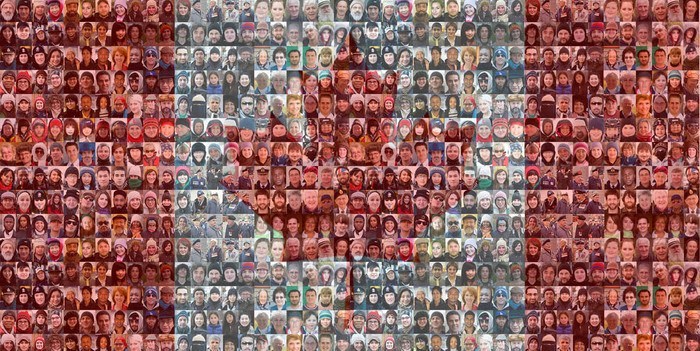
Describe a conceptual awareness of: culture, cultural diversity, culturally sensitive care, transcultural nursing, and multiculturalism in a Canadian context.
After completion of this course, culture, cultural diversity, culturally sensitive care, transcultural nursing and multiculturalism is all very important factors when providing nursing care throughout Canada. Culture is commonly understood, based on learned traditions and what people use to interpret their experiences (Srivastava, 2007). Cultural Diversity Culturally Sensitive care is understanding ones culture, about the dynamics with understanding differences in cultures, while also focusing on self awareness and insight to unfamiliar cultures (Srivastava, 2007). Transcultural Nursing was introduced by Madeleine Leininger who explains that transcultural nursing is an area of study that focuses on comparative human care, where focus is on the differences and similarities of the beliefs, values, lifestyles of cultures while providing congruent cultural care that benefits the health care provided to individuals (Srivastava, 2007). Multiculturalism is explained as condition that many cultures co-exist within a society, cultural diversity within a multi-ethnic society, ensuring tolerance and respect for cultural diversity (Srivastava, 2007). These definitions are all essential components while providing care to individuals. Canada is becoming such a culturally diverse society with many immigrants coming to Canada to start their new lives. In one community there could be many different cultures being portrayed and presuming everyone has the same culture would decrease the effectiveness of care being provided to these individuals. Nurses and health care professionals are required to obtain knowledge, skills and respectful attitudes while providing care to individuals that are from a different culture. Learning about ones culture, allowing individuals to incorporate their culture and not presuming ones culture will provide more successful healthcare outcomes. This often creates challenges to provide quality care and respected outcomes.
Overcoming Nursing Care Challenges in a Multicultural Health Care Setting
This article relates to this learning outcome by explaining some of the challenges nurses face while caring for individuals from different cultures. With Canada becoming such a multicultural society, nurses and healthcare providers have the possibility of facing many unfamiliar cultures or traditions, thus creating possible bias opinions as discussed throughout this article. This article also explains that immigrants that are new to Finland have poor health and less likely to access health care, often times becuase of biased opinions from healthcare professionals. This could even be applicable to immigrants new to Canada, there food choices, traditions, cultural beliefs, religion, language barriers or poor understanding to the health care systems. Atanga & Ayong (2017), explains that cultural diversity creates many challenges, along with lack of cultural sensitivity and understanding, language barriers requiring interpreters which can increase the stress levels for the patients and healthcare professions trying to access this service. Therefore having better understanding of culture, cultural diversity, cultural sensitivity and multicultural care can influence the outcomes of healthcare for new immigrants to Canada trying to access healthcare services.
Multicultural Nursing
This article written by Rittle (2015), is relevant to this learning outcome because there is explanation as to how important culturally competent care influences not only the diverse multicultural patient population but also the collaboration between health care workers. Throughout the article there was discussion explaining that providing culturally competent care to individuals from a different culture is a learned skill. When providing care to patients and when working with other members of the healthcare team there are techniques listed in this articles that assists working with a diverse multicultural society. These techniques are as listed; establishing training programs, inviting patients and professions to share their cultural traditions, creating a respectful work environment, collaborating with the patient and health care professional to share resources to better understand cultural beliefs and values (Rittle, 2015). Rittle (2015), also explains the importance of not using slang or jargon, recognizing nonverbal communication, and utilizing an interpreter when required. This are all techniques that could be utilizes when providing culturally sensitive care to culturally diverse population.
References
Atanga, J., & Ayong, Q. (2017). Overcoming Nursing Care Challenges in a Multicultural Healthcare Setting. Retrieved from https://www.theseus.fi/bitstream/handle/10024/138148/Ayong_Quinta.pdf .pdf?sequence=1&isAllowed=y.
Rittle, C. (2015). Multicultural Nursin. Workplace Health & Safety, 36(12). doi: DOI: 10.1177/2165079915590503.
Srivastava, R.H. (2007). The healthcare professional’s guide to clinical cultural competence. Toronto, ON: Elsevier Canada
 Site Title